Malaysia - A concise review
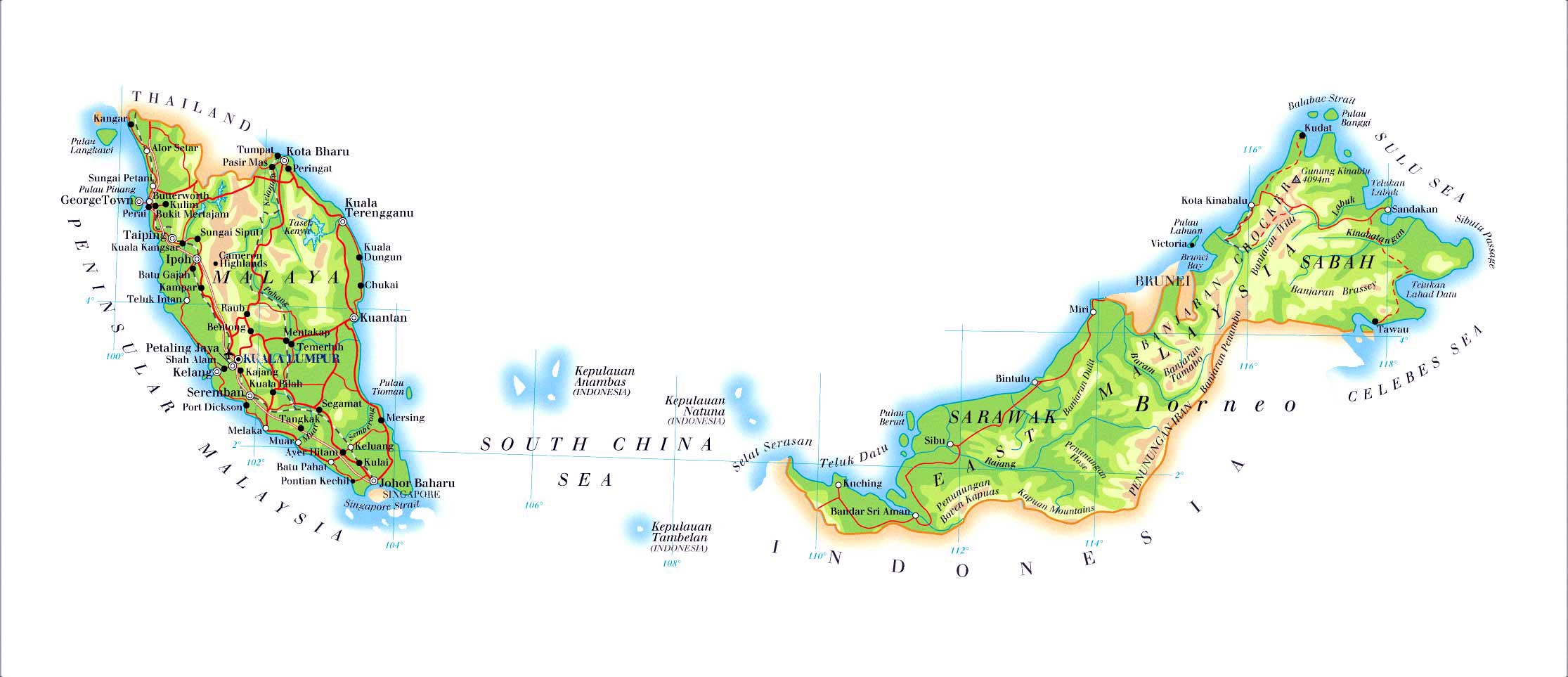
Malaysia occupies a strategic position in Southeast Asia, covering a land area of approximately 330,000 square kilometres (127,000 square miles). The country is divided into two distinct regions—Peninsular Malaysia and East Malaysia—separated by the South China Sea.
Malaysia consists of 13 states—Johor, Melaka, Negeri Sembilan, Selangor, Pahang, Perak, Terengganu, Kelantan, Penang, Kedah, Perlis, Sarawak and Sabah—and three Federal Territories: Kuala Lumpur, Putrajaya and Labuan.
Peninsular Malaysia shares its northern border with Thailand, while Singapore lies to the south, separated by the Straits of Johor. East Malaysia occupies part of the island of Borneo and shares land borders with Brunei and Indonesia.
Malaysia has a tropical climate, with warm and humid conditions throughout the year and temperatures generally ranging between 24°C and 37°C. The country experiences two main monsoon seasons. The Southwest Monsoon, typically from May to September, generally brings relatively drier conditions, while the Northeast Monsoon, from around November to March, brings heavier rainfall, particularly to the east coast of Peninsular Malaysia.
Malaysia operates on Malaysia Standard Time (MYT), GMT+8.
Photo credit: orangesmile.com
Population, Languages, Religions and Festivals of Malaysia

Malaysia reflects a vibrant heritage and rich mosaic of cultures, shaped over centuries by its strategic position along the international spice and maritime trade routes.
Malaysia’s population is estimated at 34.4 million in 2026, up from 34.2 million in 2025. According to the Department of Statistics Malaysia, population growth continues at a more moderate pace, reflecting gradual changes across the country’s demographic landscape.
Home to a diverse mix of ethnic groups, traditions, languages and religions, Malaysia’s multicultural character is one of its defining features. To truly understand Malaysian culture, one must first get to know its people—their heritage, customs and the traditions that have come together to shape modern Malaysia.
Photo credit: The AZB
Malay
Malay made up of Malaysia's largest ethnic group. In Malaysia, the term Malay refers to a person who practises Islam and Malay traditions, speaks the Malay language and whose ancestors are Malays. The Malays are known for their gentle mannerism and rich arts heritage.
Chinese
The second largest ethnic group in Malaysia. The three sub-groups who speak a different dialect of the Chinese language are the Hokkien who live predominantly on the nothern island of Penang; the Cantonese who live predominantly in the capital city of Kuala Lumpur; and the Mandarin-speaking group who live predominantly in the southern state of Johor.
Indian
The smallest of three main ethnic groups. Most are descendants of Tamil-speaking South Indian. Other dialects are largely practised as well. Predominantly Hindus, they brought with them their colourful culture such as ornate temples, spicy cuisine, exquisite sarees and traditional outfits.
Orang Asli
Orang Asli is a general term used for any indigenous groups that are found in Peninsular Malaysia. They are divided into three main tribal groups: Negrito, Senoi and Proto-Malay. Each group or sub-group has its own language and culture.
Sabah
Located in East Malaysia, Sabah is located in the Borneo Island and the largest indigenous ethnic groups pf Sabah's population are the Kadazan Dusun, the Bajau and Murut.
Sarawak
Located in East Malaysia, Sarawak is located in the Borneo Island. Collectively known as the Dayaks, the Iban, Bidayuh and Orang Ulu are the major ethnic groups in the state of Sarawak.
Need more guidance? KL The Guide got you!

Discover Kuala Lumpur and beyond with KL The Guide – a complimentary lifestyle and destination publication designed to showcase the very best that Malaysia has to offer.
From exceptional dining experiences and cultural attractions to wellness escapes, family activities, travel destinations, and hidden gems, KL The Guide serves as an inspiring resource for expatriates, business travellers, diplomats, visitors, and locals alike.
Available in both print and digital formats, the publication reaches readers through airport lounges, embassies, tourism offices, and other key locations across the Klang Valley, connecting people with meaningful experiences and the rich diversity of Malaysia.
Recognised by The Star for its contribution to promoting tourism and lifestyle experiences, KL The Guide continues to be a trusted companion for those looking to explore and discover.
Explore the digital edition and start your journey of discovery today.
Government and Legal System

General
Malaysia is a constitutional monarchy, headed by the Yang di-pertuan Agong, customarily referred to as the king. The Yang di-pertuan Agong is elected for 5 year terms from among the nine Sultans of the Peninsular Malaysian states. The Yang di-pertuan Agong is also the leader of the Islamic faith in Malaysia. Malaysia practises parliamentary democracy and has a three-tier government structure: Federal, State and Local. Federal executive power is vested in the Cabinet led by the Prime Minister.


